
Written by Courtney Human November 2023
With December approaching ‘quick weight loss strategies’ are what Midline Dietitians is dodging left, right and centre! Lately, what quickly gets roped into this category is intermittent fasting (IF) which has become a buzzword in the health and wellness community. No, it’s not just another FAD diet but rather a lifestyle shift with roots in ancient practices bolstered by modern day science. Maybe, you are someone who practices this in your daily routine without even trying. I for one, am that person who wakes up at 6:00am and is nauseously hungry by 7:00am failing miserably at fasting in any form. Within this blog post we are delving into intermittent fasting, the types, pros, and cons with a special emphasis on woman, based on various dietitians’ insights – and scientific evidence, of course.
Intermittent fasting is more than just a diet; it’s a pattern of eating. It doesn’t dictate what you eat but rather when you eat. This approach is embedded in many cultures and religions for millennia but in its modern form, IF has been recognized for its potential benefits in weight management, improved metabolic health, and even longevity. Typically, there are 3 most common means of fasting being:
- Periodic or modified fasting known as the 5:2 method which involves eating normally for five days of the week and restricting calorie intake to 500-600 calories on the remaining two non-consecutive days.
- Time restricted fasting which can vary between the 16:8 or 12:12 method of restricting daily eating to an 8-hour window, followed by 16 hours of fasting. Or gentler approach, where you fast for 12 hours and eat during the remaining 12 hours.
- Alternate day fasting, whereby one alternates not eating at all with eating anything you want on alternating days.
When it comes to weight loss and intermittent fasting studies are limited to small sample sizes and short periods of time. This makes it difficult to say if one type of IF is better than another. Moreover, while limiting your eating window may be highly beneficial in those late-night eaters, we as dietitians still struggle to tease out the weight-loss benefit when compared to a calorie restricted meal plan. Should the credit be given to having a restricted time frame of eating alone or the fact that the limited time frame has simply helped achieve a calorie deficit just like a calorie restricted meal plan without fasting periods would. Studies place more emphasis on the quality and quantity of foods eaten opposed to the actual eating window.
One of the pros of IF is its simplicity without daily calorie counting being needed, flexibility of no foods being “off limits” and fasting times varying to suite individual preference or needs. Scientific evidence does show metabolic improvement with fasting periods on glucose regulation especially in medically overweight or obese people as well as its role in reducing inflammation within the body helping to better control blood pressure, and cholesterol levels. Although more studies are needed IF might boost fat burn as by not eating for 10-16 hours of the day your body may start to use fat stores as energy. Additionally, reduced cancer risk, and increased longevity is linked to proposed cellular repair occurring in a fasted state, but most studies are limited to animals. Personally, when I unintentionally fast I am extra appreciative of when I eventually eat food. All of a sudden, a humble peanut butter sandwich tastes like a gourmet burger. For some IF can be a digestive reset after periods of overindulgence and promote more mindful eating.
On the flip side there are challenges of IF with the biggest one being this is not a one size fits all kind of lifestyle. For example, it may not suit individuals with high energy demands, irritable bowel syndrome, reflux disease or diabetes. IF also has the ability to negatively impact those leading active lifestyle due to insufficient energy intake to optimize training ability and recovery periods risking muscle losses. One of the key features of a dietitian approved diet is sustainability and studies note there is a high drop-out rate possibly attributed to overly restrictive approaches and with this regaining of initially lost weight. The fact is it is normal for us to want to eat when we are hungry! If these biological hunger cues are ignored altogether this could look like a constant gnawing stomach, mood swings, reduced concentration, and tiredness- also known as being hangry– which is not health-promoting on any level. Reaching for the “feel good foods” when were in this state in a bid to feel full again can have a knock-off effect on our energy-supplies. Unfortunately, if the appreciation of eating turns into a food obsession there is a risk of overeating in non-fasting periods or cycles of restricting and binging. Recent studies also emphasize the impact on mental health in younger people. On a lighter note, simply accidental calorie intake like adding milk to your daily cappa may disrupt fasting benefits too. It is safe to say many people who claim to “fast” do not necessarily “fast,” at all. Much research that looks at metabolic benefits of fasting has been conducted on a severe caloric restriction or the 5:2 method which is much harder for some to adhere to than the 16:8 method. In our modern-day life of chronic emotional, physiological, and environmental stressors (thanks, Eskom), IF might simply be another stressor that you just don’t need.
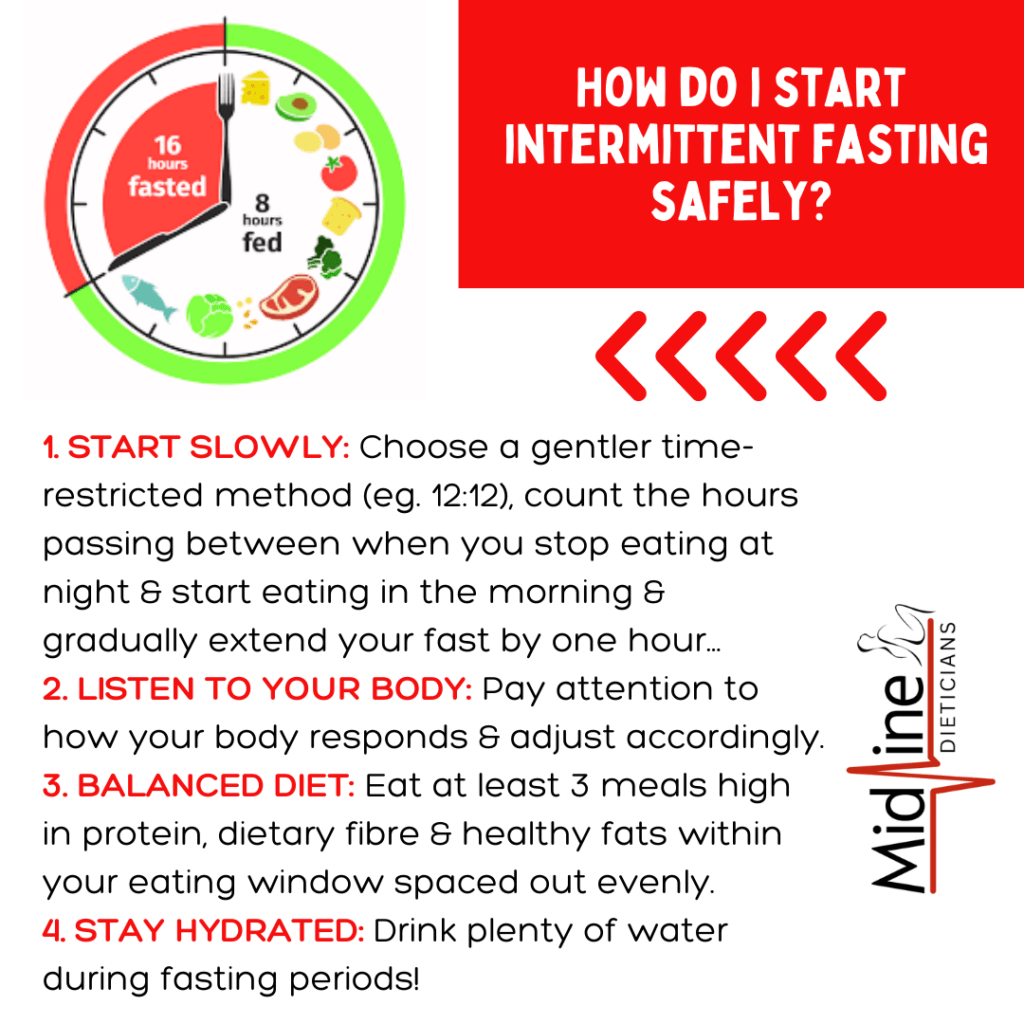
When looking at woman of reproductive age we are especially sensitive to the stress of caloric restrictions and prolonged fasting. Alongside this, the increased cortisol levels due to persistent fasting risks sugar dysregulation, heightened insulin resistance, lean muscle losses, fatigue and disrupted thyroid functioning. On a more extreme note, there could be loss of your menstrual cycle or infertility if undereating in a severe calorie restriction. By skipping breakfast and eating late into the evening one may also induce hormonal imbalance as a result of the disruption of circadian rhythm. Moral of the story is, as a woman, just because Karen has started IF don’t just jump on the band wagon without considering: Am I sleeping enough? Am I feeling stressed? Do I have irregular menstrual cycles? Am I pregnant or breast feeding? Do I have a history of or current disordered eating? Do I have thyroid or blood sugar issues? Am I under the age of 18? If you answered, “Yes” to any of these, IF is not recommended for you – phew! If all your answers are “No,” let the Hunger Games begin. Jokes aside if you are unsure, first seek the go-ahead from a healthcare practitioner or registered dietitian or follow our 4 steps in the above visual on how to safely start IF the ‘dietitian approved way.’
Fasting should be used as a tool and not a rigid diet approach. Most studies are animal based and if on humans are disease specific and not on the ‘general population’. Fortunately, (and unfortunately) majority of our obesity ridden population does fall into a disease specific category anyway thus can benefit from short periods of severe caloric restriction to boost digestive health. Nevertheless, it is important to consider the research supporting your individualized goals. Intermittent fasting as a sustainable weight loss solution is highly dependent on it fitting into your lifestyle you already lead. Don’t beat yourself up if you need a more consistent eating pattern like I do. Regardless of whether you fast or not, you deserve to feel satisfied, fuelled, and energized throughout your day not like a starving player on day 30 of Survivor!
0 Comments