
Written by Courtney Human RD(SA)
In honor of ADSA Dietitians Week 2026 and this year’s theme, “It’s More Than a Job,” I felt this was the right time to make things a little personal. My surname is Human. And long before I became a dietitian, I was only Human too. That might sound obvious, but sometimes it feels like people forget. There seems to be an unspoken expectation that dietitians should somehow be exempt from the health challenges we help our patients navigate every day. We are expected to eat perfectly, exercise consistently, never gain weight, never struggle, and ideally look like we stepped straight off the cover of a wellness magazine.
I am constantly reminded of this through my career. Recently, a ward sister jokingly asked whether I was following the meal plans I give my patients because, in her words, my face looked like it was getting fatter. Previously, an elderly male patient commented, if you’re a dietitian why aren’t you as thin as a rake, I thought all dietitians were fit and went to the gym every day. Maybe, they meant no harm, but the comments stuck. Not only because it offended me (obviously), but because it highlighted how quickly we associate a healthcare professional’s appearance with their competence.
The irony is that at 21 years old, more than ten kilograms lighter than I am now, I was diagnosed with severe hypertension. My blood pressure was 200/140 and I had no symptoms. My left ventricle had already started thickening. Following a family history riddled with cardiovascular disease, and after watching my father undergo a six-stent procedure, I found myself sitting on the other side of the consultation desk. Today I take chronic medication every day and consider myself fortunate that the problem was identified early as some young hypertensives do not get that lucky. A few years later, I developed kidney stones. The urologist laughed and said, “I think you need to go see a dietitian.” For a long time, I felt embarrassed by these diagnoses. I was a dietitian. Surely, I was supposed to be the healthy one.
But working in the hospital has taught me something incredibly important. Disease does not care about your profession. The healthiest person in the room can still receive life-changing news. Most people assume all dietitians spend their days only making meal plans & helping patients lose weight. My reality is I am a clinical dietitian, and weight loss is one of the things I do least. Most of my day revolves around helping people eat enough and try gain or maintain their weight, and specifically muscle mass.
I work predominantly with oncology patients who may have an advanced disease, be newly diagnosed, be navigating side effects of treatment or may need nutritional optimization for major surgery. Some of which can no longer taste food, struggle to swallow, have no appetite or are losing muscle faster than their bodies can rebuild it. Some are fed through tubes. Some through their veins. Being a clinical dietitian often means standing at opposite ends of the same road. One day you’re helping optimize a patient for surgery and watching them ring the bell at the end of treatment. The next day you’re helping a family understand why their loved one is no longer eating and reassuring them that they are not starving. Those experiences change you and sometimes you become desensitized to illness and death. But not always. Sometimes a patient stays with you. Sometimes you lie awake at 1:00 am wondering whether the patient you saw on Friday will still be there on Monday morning. Sometimes you’ve spent the entire day watching suffering unfold and the last thing on your mind is eating a tuna salad and Provitas.
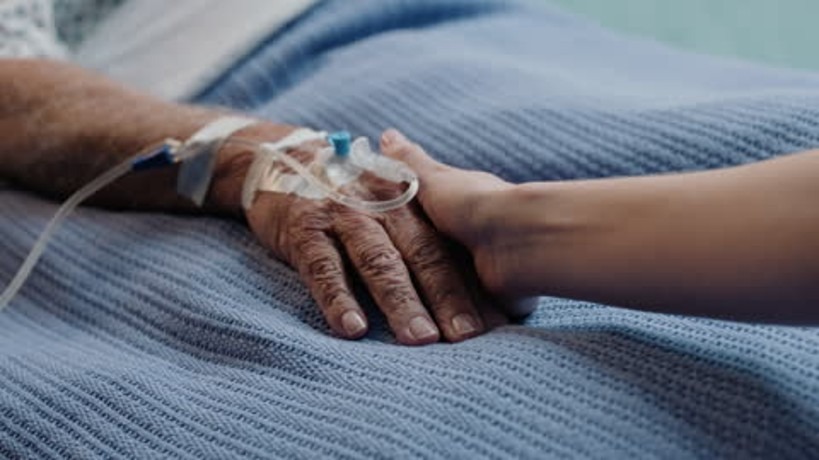
Healthcare professionals are human too. We experience stress and anxiety too. We develop coping mechanisms, some healthier than others. Some people lose weight when life gets hard. Others gain it. Neither tells you anything about their competence in their profession. My weight has absolutely nothing to do with how much I care about my patients. Because sometimes the greatest thing we offer our patients isn’t even to do with the best quality medical nutrition therapy itself. It’s simply human touch, compassion and a listening ear.
The reality is I love food. Not just fish and vegetables. I also love Spur buffalo wings, salami, KFC, Nik Naks and a dirty olive martini. I have a sweet tooth. Sour sweets are a particular weakness. I try juggle moderation with also being reminded daily how having an appetite and the ability to eat is a blessing. I know what emotional eating feels like. I know what it’s like to gain or lose weight while navigating life’s ups and downs. Fearing weighing myself on a Friday morning. And perhaps that’s why I connect with my patients. Because health isn’t something I observe from a distance. It’s something I actively work on too.
Do I want to be healthier? Absolutely. But I don’t want to pursue health from a place of shame. I don’t want to become extreme to satisfy someone else’s idea of what a dietitian should look like. I want to lead by my own authentic example. Not by being perfect, but by being honest. Acknowledging my own unhealthy coping mechanisms, seeing my psychologist when I need support, taking accountability for habits that no longer serve me. Choosing the longer and harder way to building a healthier relationship with food sustainably, something no weight loss injection can do for me (even if I do meet the criteria.)
To all my registered dietitians who do not fit the stereotype, you are not alone. You are allowed to be a healthcare professional and a patient. You are allowed to teach healthy habits while still working on your own. You are allowed to have chronic conditions, difficult seasons and imperfect days.
Most importantly, you are allowed to be human.
After all, some of us don’t really have a choice. It’s literally our surname too 😉
0 Comments