
Written by Courtney Human RD(SA)
Back Your Belly: The Irony of The “Anti-bloat” Lifestyle
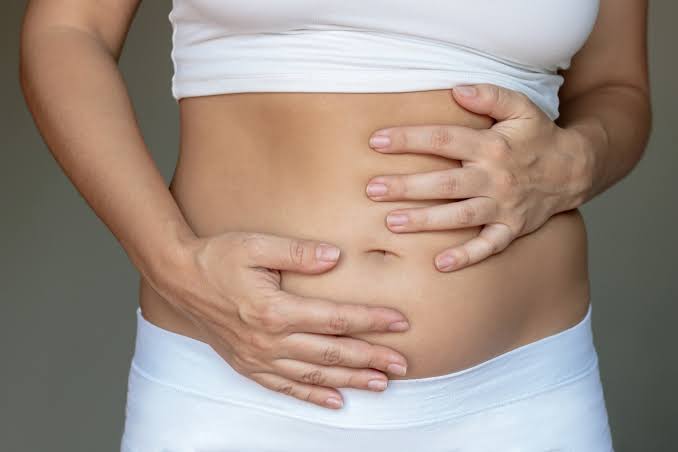
It’s August, and we’re celebrating Women’s Month. But, you’d be forgiven for thinking the official theme of the month is “Total War on the Waistline.” As woman we are relentlessly marketed the idea that a human stomach should resemble a sleek, airbrushed marble countertop 24 hours a day. Somewhere along the line, society decided that if your lower abdomen dares to push outward after 8:00pm – or, heaven forbid, after eating a substantial meal – you must be “inflamed,” “leaky,” or fundamentally broken. Let’s hit the pause button and be the sensible adults in the room for a second: A little bit of bloating is a normal physiological response.
If you are a human being who consumes food, your digestive system is supposed to change throughout the day. Food has volume. Fibre creates bulk. Your gut bacteria ferment that fibre to keep your microbiome thriving, and in the process, they produce gas. That gas is a sign that your gut buddies are alive, well, and doing their job! Pathologizing a little bit of post-meal fullness is like getting angry at your lungs for expanding when you take a deep breath. It’s just physics, not a medical emergency.

Let’s take a look at why your stomach actually fluctuates before you clear out your pantry of all joy and happiness. It isn’t always about what you eat, but it can be about how you’re living. Firstly, stress is a digestive saboteur. Your gut and your brain are connected by a constant, bidirectional superhighway called the gut-brain axis. Stress slows down digestion, alters your gut transit time and can make you hyper-sensitive to normal sensations in your abdomen. Secondly, if you have a menstrual cycle, you know that fluid retention is part of the package. Hormonal fluctuations change how your body holds onto water and can directly influence gut sensitivity. Finally, volume and speed. Did you inhale your lunch while answering emails? Eating quickly or consuming a larger-than-usual meal naturally creates temporary distension. Your stomach is a muscular bag; it expands to hold food.
I see women in my practice every single day who have cut out gluten, onions, garlic, dairy – and the list goes on – all in a desperate pursuit of never feeling “puffy.” Here is the irony of the “anti-bloat” lifestyle: Hyper-vigilance is a major bloat trigger. When you spend every meal obsessively scanning your stomach for a slight protrusion, you are effectively signalling your nervous system to stay in “fight or flight” mode. As we mentioned, stress hampers digestion. By becoming a full-time detective of your own digestive tract, you are often creating the very symptoms you’re trying to avoid. Living in fear of a single clove of garlic or a slice of sourdough can be a recipe for disordered eating and social isolation.
Now, I am not saying you should ignore your body. There is a clear line between “normal digestion” and “something is wrong.” If your bloating is persistent, severe, and happens regardless of what you eat, it’s time to stop Googling and start consulting a registered dietitian or a gastroenterologist. You should investigate further if you experience:
- Altered bowel habits: Chronic constipation or diarrhoea that isn’t resolving.
- Unexplained weight loss: Significant, unintended weight loss is a classic red flag.
- Pain: Bloating should be uncomfortable, not agonizing. If you are experiencing sharp, persistent abdominal pain, get it checked.
- Sudden onset or worsening: If you’ve never had issues and suddenly your stomach is distending to the point where it impacts your daily quality of life or requires extreme dietary restrictions, we need to look for underlying conditions like SIBO (Small Intestinal Bacterial Overgrowth), coeliac disease, or other malabsorption issues.
Here are 6 evidence-backed strategies to manage the bloat better:
- Slowly Increase Your Fibre: If your diet is low in fibre and you suddenly binge on raw veggies and lentils, your gut bacteria may ferment it all at once, creating a gas trap. Increase fibre incrementally over several weeks so your microbiome can adapt.
- Take a Post-Meal Walk: A simple 10-to-15-minute walk or light physical activity after eating accelerates gastric emptying by stimulating gut motility, helping trapped gas move along faster.
- Use Enteric-Coated Peppermint Oil: While peppermint tea is comforting, robust clinical trials point to enteric-coated peppermint oil capsules as the menthol acts as a natural smooth-muscle relaxant in the gut, easing spasms and releasing trapped gas.
- Try Herbal Drops Like Iberogast: This multi-extract herbal liquid helps modulate gut motility, soothe gut tension and ease functional bloating.
- Practice Diaphragmatic Breathing: Shallow chest breathing tightens your abdominal wall and worsens tension. Slow, deep belly breathing activates the vague nerve as a part of the gut-brain axis, signalling safety to your nervous system and relaxing abdominal muscles.
- Fix Your Eating Mechanics: Swallowing excess air balloons your stomach. Slowing down your eating pace, chewing thoroughly, and skipping straws or gum dramatically reduces the volume of air trapped in your digestive tract.
This Women’s Month, give yourself permission to exist in a body that changes. Your stomach is meant to expand when you eat, curve when you sit, and soften when you relax. Focus on how you feel rather than chasing an impossible standard of flatness. If your symptoms ever cross the line into severe, persistent pain or altered habits, consult a professional. Otherwise, let go of the food fear, trust your biology and remember that passing a little gas is just your microbiome saying, “howzit” to the world, its only natural anyway? Right?
0 Comments